MYOG Groove Stove
The Groove Stove is my most frequently used stove. This alcohol stove is on the one hand very efficient and on the other hand easy to make. A pen, a pair of scissors, and less than five minutes are enough to build this stove.
Ultralight Hike
The Groove Stove is my most frequently used stove. This alcohol stove is on the one hand very efficient and on the other hand easy to make. A pen, a pair of scissors, and less than five minutes are enough to build this stove.
Only a 0.2 L aluminum can is needed for construction.
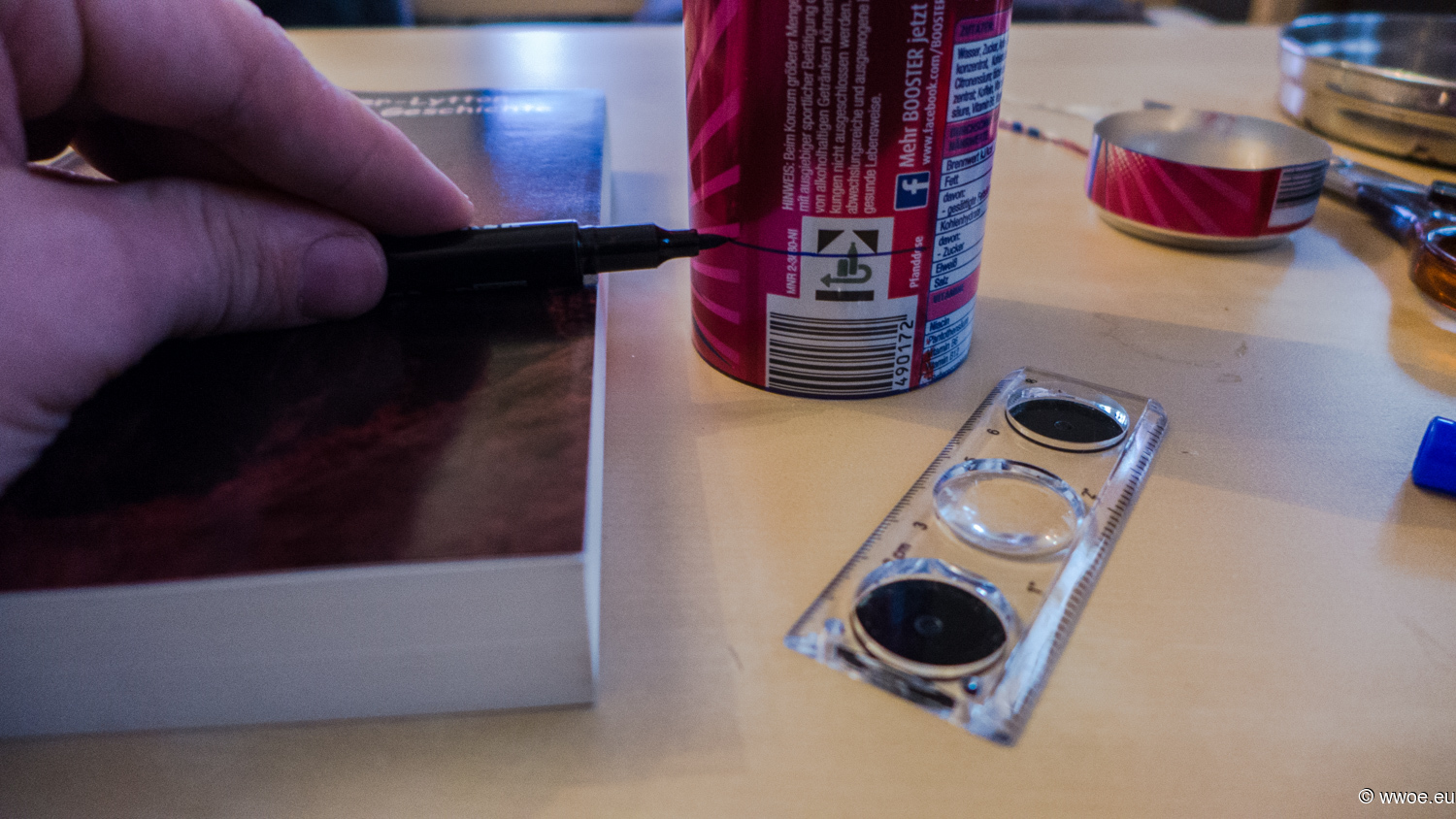
First, the outer part of the stove must be marked. To do this, mark the can height at 22 mm and 30 mm from the can bottom. It has proven effective to place a pen at the correct height on a book and rotate the can once. This way the distance is precisely transferred onto the can.
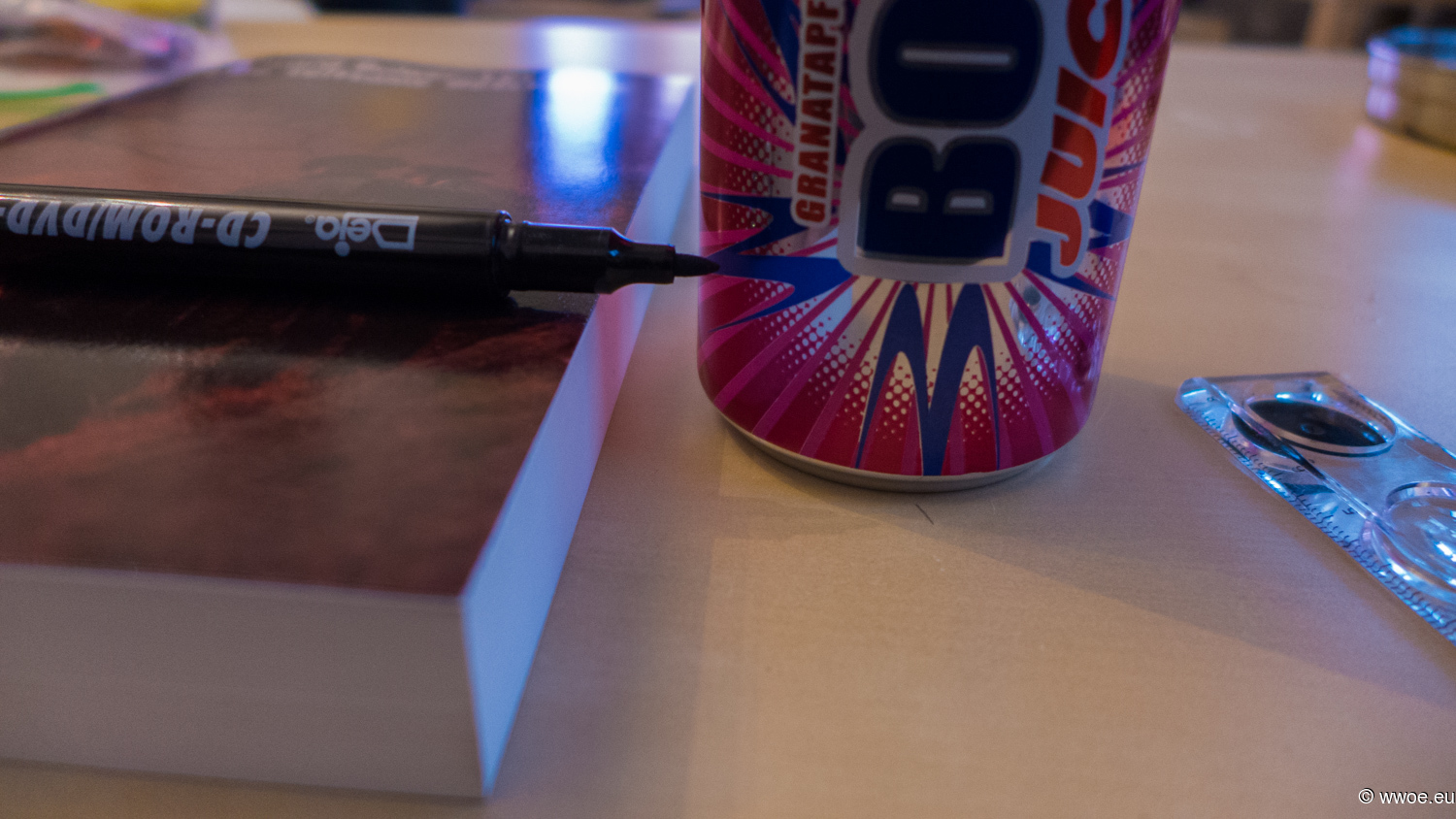
Now rotate the can; this marks the height evenly on the can.
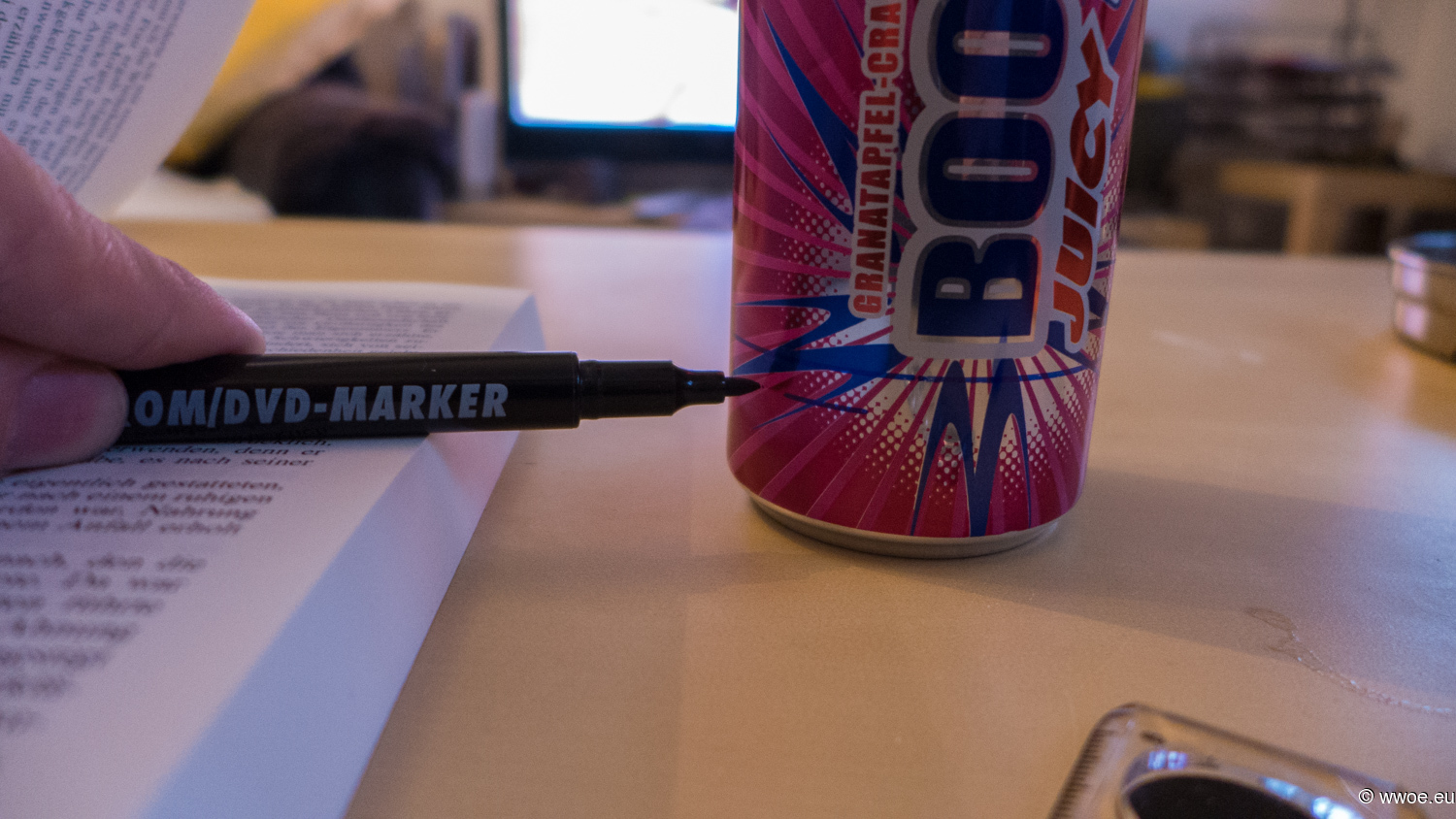
Next, the future bottom of the stove must be cut out. Aluminum is a very soft metal and the cans have a very thin wall thickness; it is easily possible to cut the material with standard household scissors. To do this, start with the scissors between the two markings (22 mm and 30 mm) and cut the can into two halves. After the can is cut, adjust both halves of the can exactly to the respective lines. Both can halves should now be able to stand again without wobbling.
Next, the 26 mm inner part must be cut from the rest of the can in the same way. Because the can now has a flat edge at the bottom again, the same technique used for marking the bottom part can be applied.
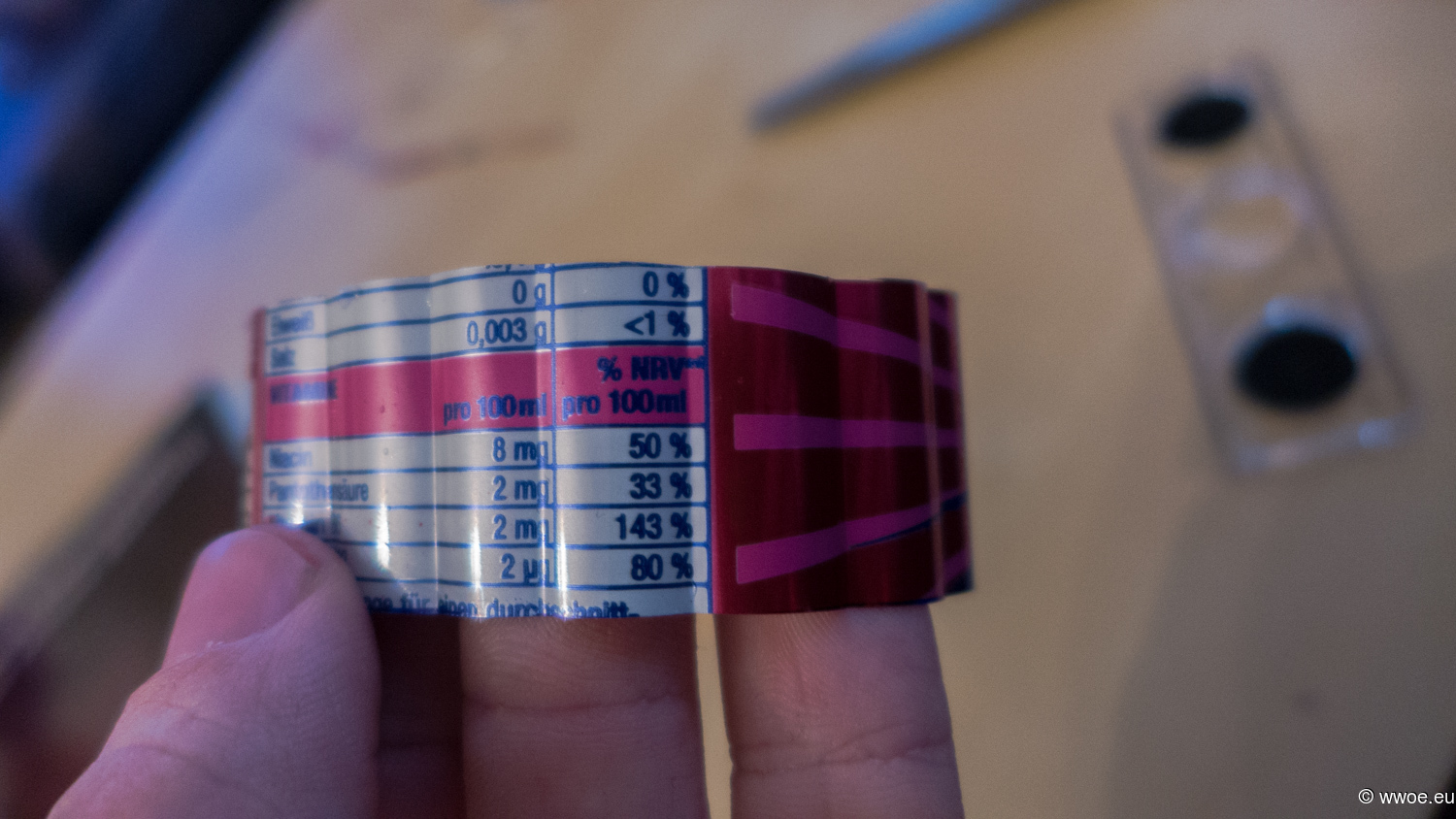
In order for the inner part to be inserted into the outer part, it is necessary to press the material slightly inward. These indentations can be made very well with a ruler as follows.
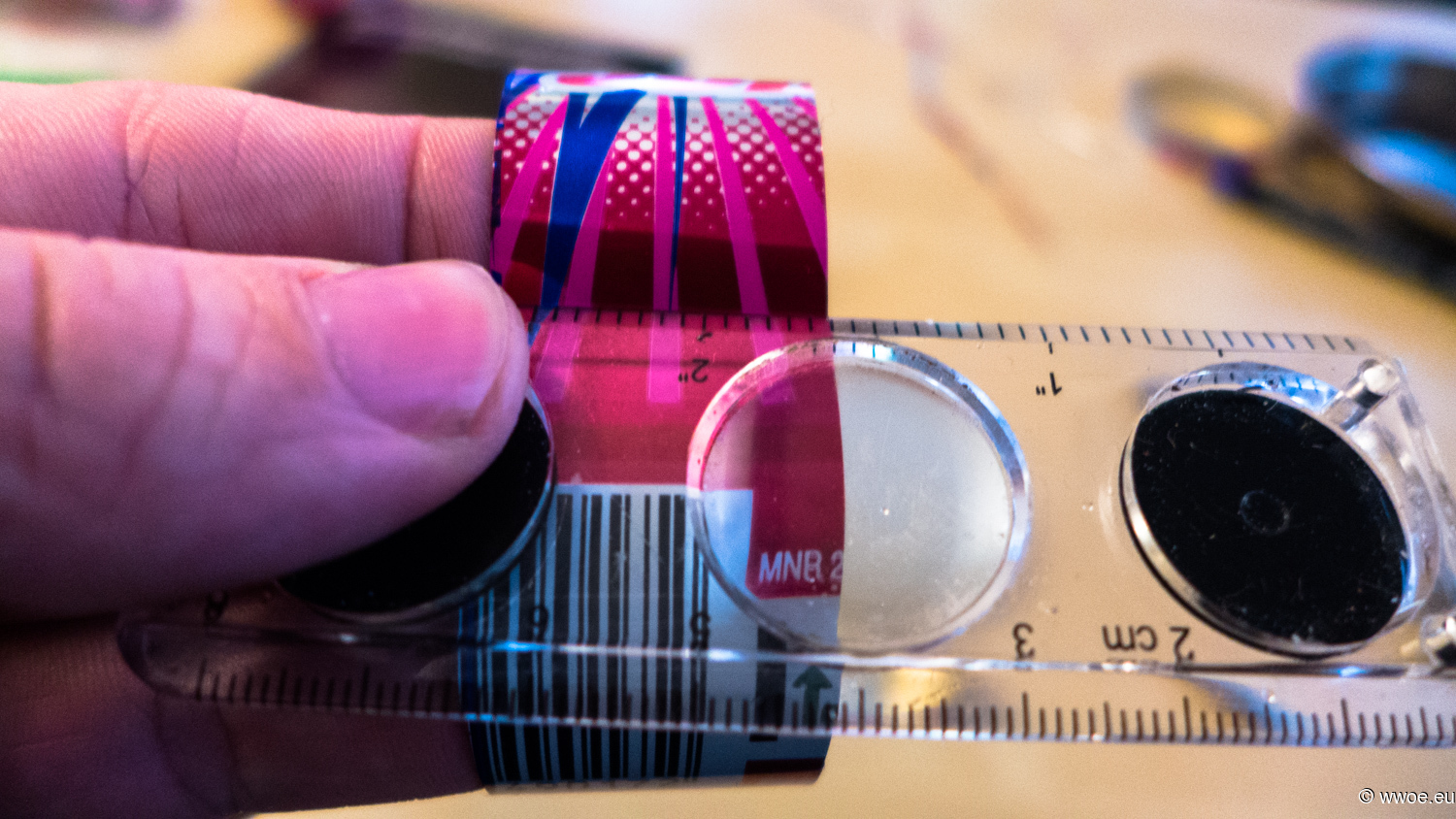
About 12–16 such grooves are needed for the stove. These grooves serve two purposes. On the one hand, the diameter of the inner part is reduced and it can be inserted into the outer part without any problems, and on the other hand, a small gap forms between the inner and outer part. In this gap, the alcohol is later transported upward via a capillary effect before it evaporates through the temperature of the flame and becomes flammable.
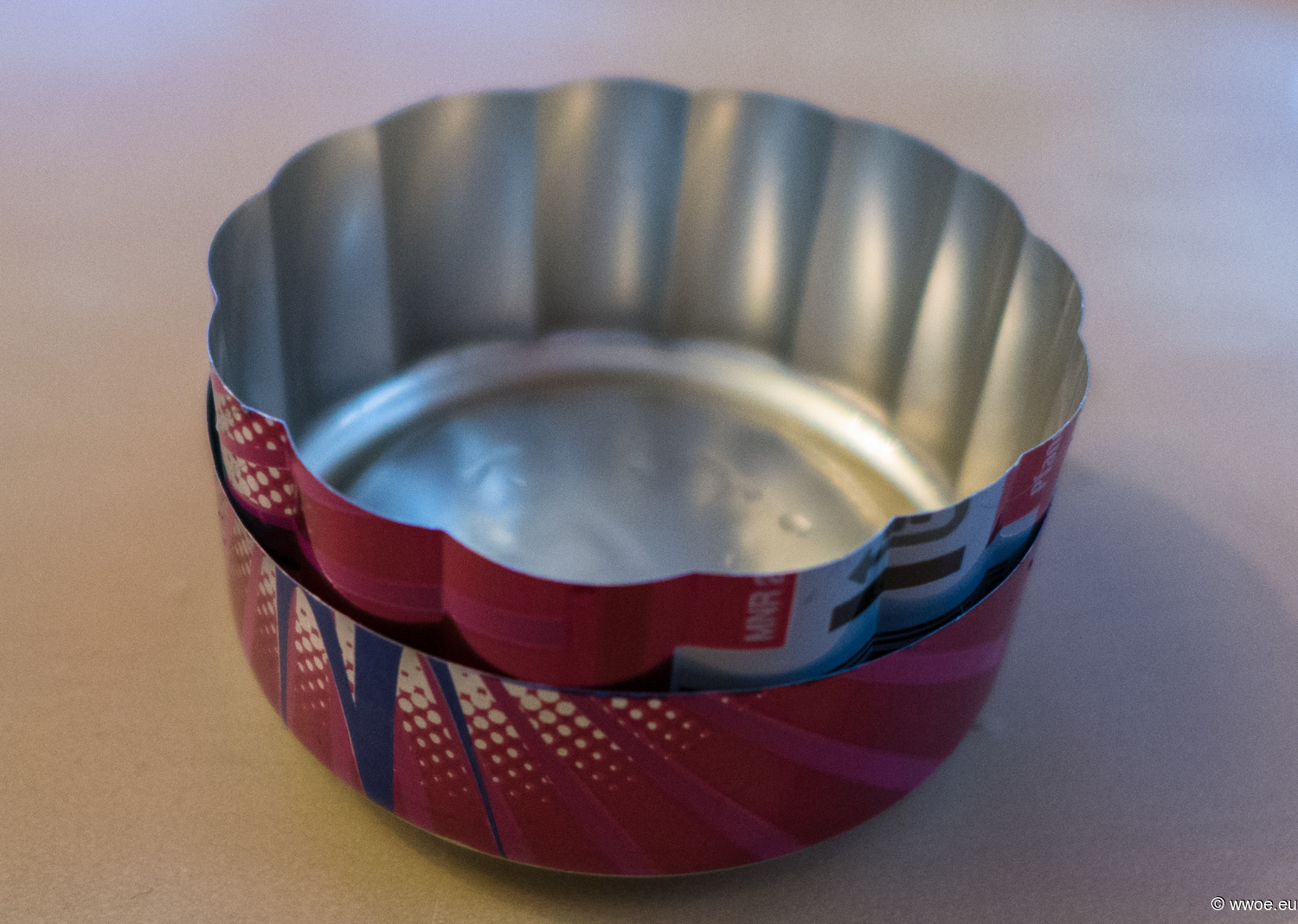
Now the two parts just need to be inserted into each other and the Groove Stove alcohol stove is finished.
To operate the stove, simply pour in some alcohol (10–15 ml) and ignite it. Once the alcohol burns through the grooves, the pot can be placed on the stove.
In this process, 400 ml of water boils in 3–5 minutes with about 12–14 ml of alcohol consumed.
In my experience, the stove works down to freezing temperatures. However, at single-digit positive temperatures, some precautions should be taken so that the stove continues to start quickly and does not go out during operation.
For one thing, it is advisable to place the stove on some aluminum foil. This reflects the heat radiation towards the pot. This not only saves alcohol when cooking, but also reduces the stove going out in cold temperatures.
On the other hand, the stove starts relatively poorly at these temperatures; it can take as long as half a minute before the pot can be placed on the stove. To shorten this time, it has proven effective to first pour the alcohol into the stove, then hold the flame of a lighter under the stove so the alcohol is preheated. When the alcohol begins to evaporate, place the stove on the aluminum foil and ignite the vapors.
With these measures, the stove can be used without problems even at low temperatures.
This stove is only for use with small cooking vessels with less than one liter capacity and less than 20 ml of alcohol. For larger vessels, a hole must be drilled in the upper edge of the inner part. Otherwise, the burning alcohol can expand strongly inside the inner part due to the rise in temperature. Without this hole, the pressure cannot escape other than by forcing the burning alcohol through the grooves of the inner and outer parts and out of the stove.
With this modification in the outer part, the pressure can then escape without the burning alcohol being forced out of the stove.


