Nitecore NU10
The Nitecore NU 10 is a very good headlamp, made for ultralight trekking. The model is waterproof, rechargeable and offers a brightness that is perfectly sufficient for trekking. The headlamp weighs just 70 grams.
Ultralight Hike
The Nitecore NU 10 is a very good headlamp, made for ultralight trekking. The model is waterproof, rechargeable and offers a brightness that is perfectly sufficient for trekking. The headlamp weighs just 70 grams.
The lamp has 5 LEDs. One of the LEDs emits red light, which barely impairs the eyes’ night vision. The red light has an output of 18 lumens and, in my opinion, is enough to light hiking trails and well-trodden paths.
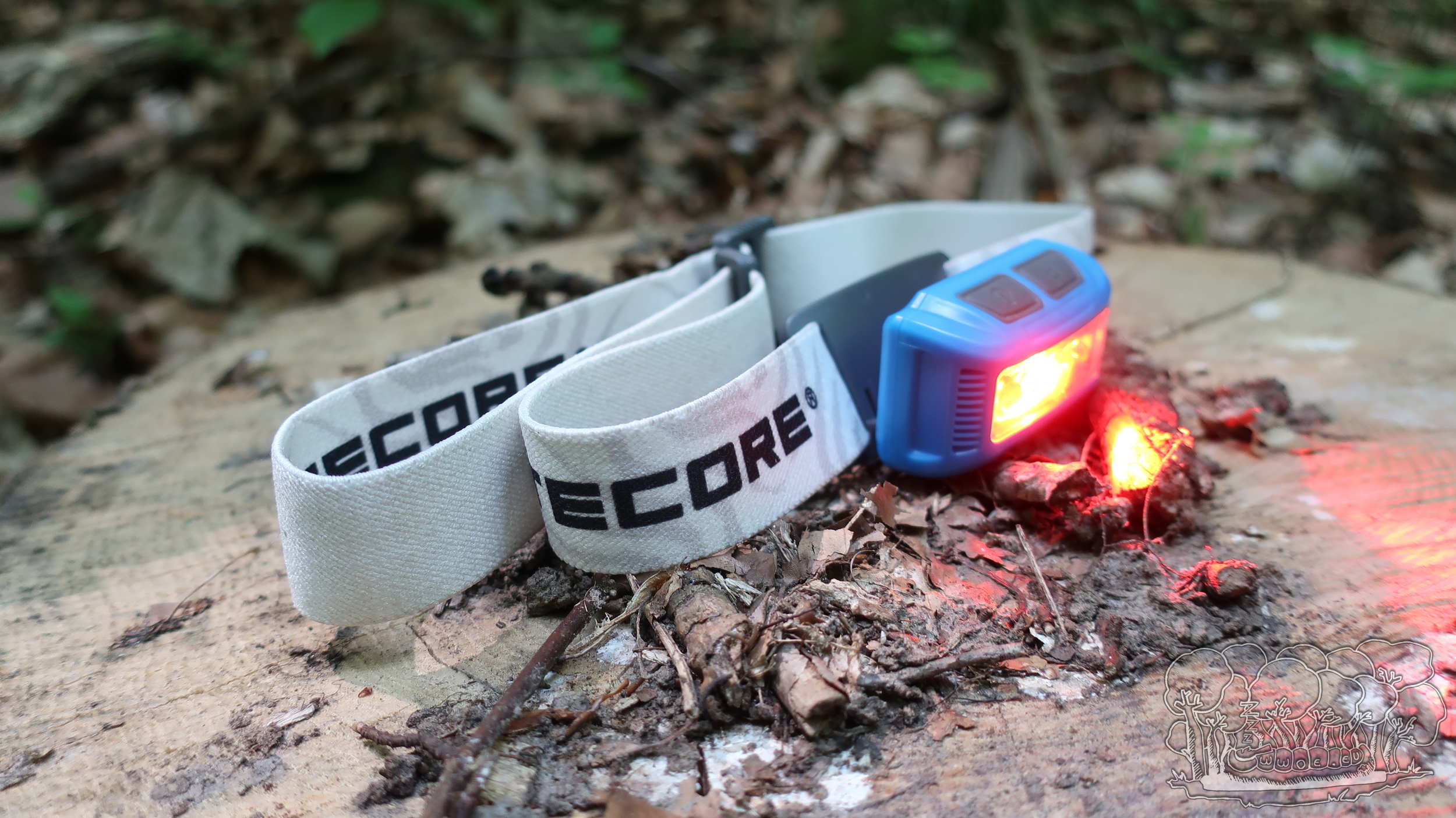
On hikes far away from visible paths, I prefer the white light, since leaves and branches are easier to make out. The white light has a brightness of up to 150 lumens. So each of the white LEDs has a luminous power of about 38 lumens. The Nitecore Tube I often use has, for comparison, a brightness of 45 lumens on its highest setting and consists of a single LED. The installed LEDs of the two flashlights are thus comparable.
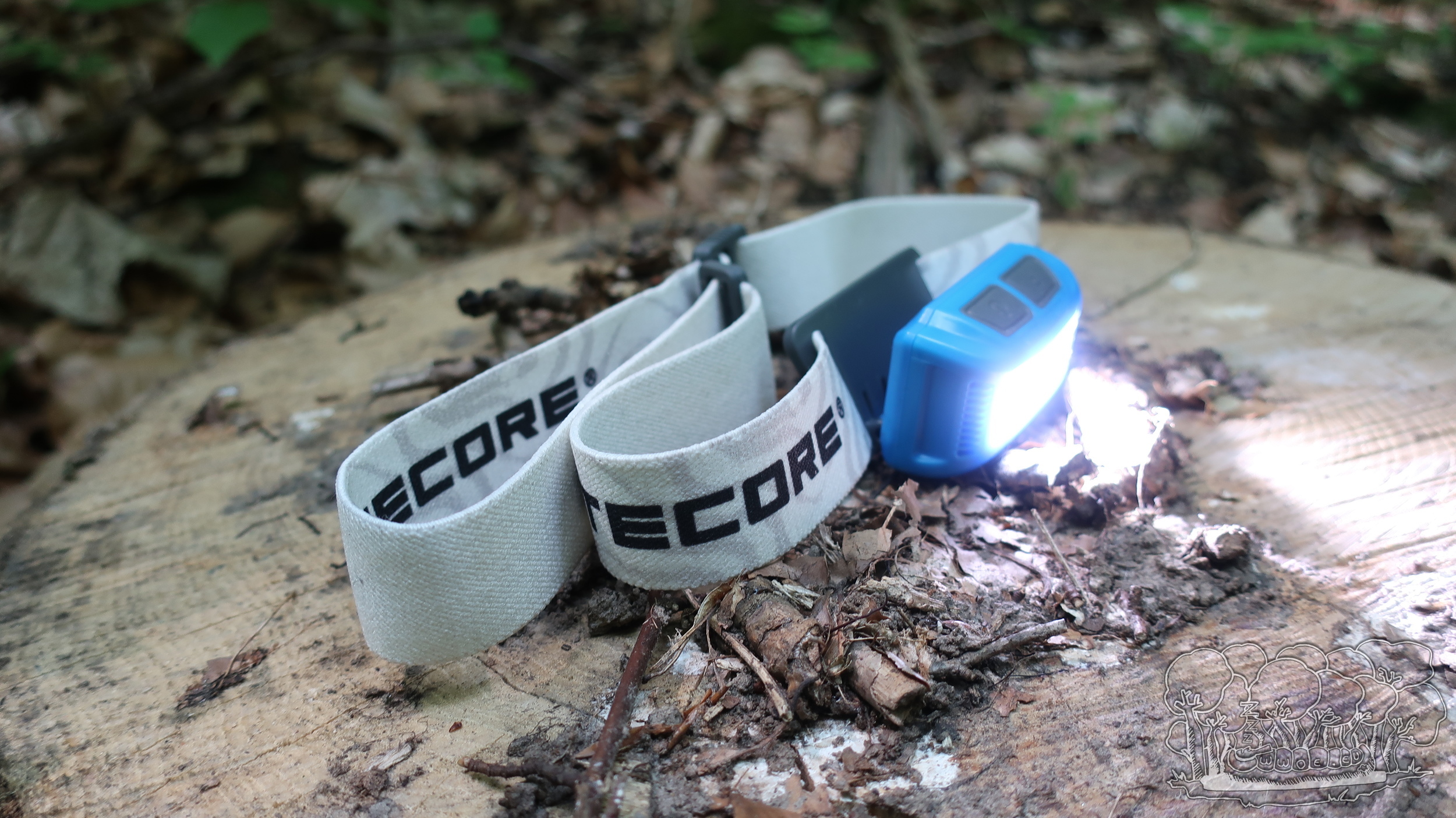
The white light of the NU10 can be adjusted in three levels. On the Low level, as with the Nitecore Tube, it has a brightness of one lumen and shines for up to 150 hours on a single charge. On the Medium level, the light output is 35 lumens for over 8:45 hours, and on the High level 150 lumens for over 7 hours. After 45 minutes, the lamp switches down from the highest level to the Medium level to protect the battery.
The headlamp has a built-in 900mAh lithium-ion battery. So apart from the power bank already carried for the smartphone, no additional spare batteries are needed for the lamp. The battery is charged via a Micro-USB port. A full charge takes about two hours. The battery is charged with a current of up to 800mA.
While charging, a red light shines.
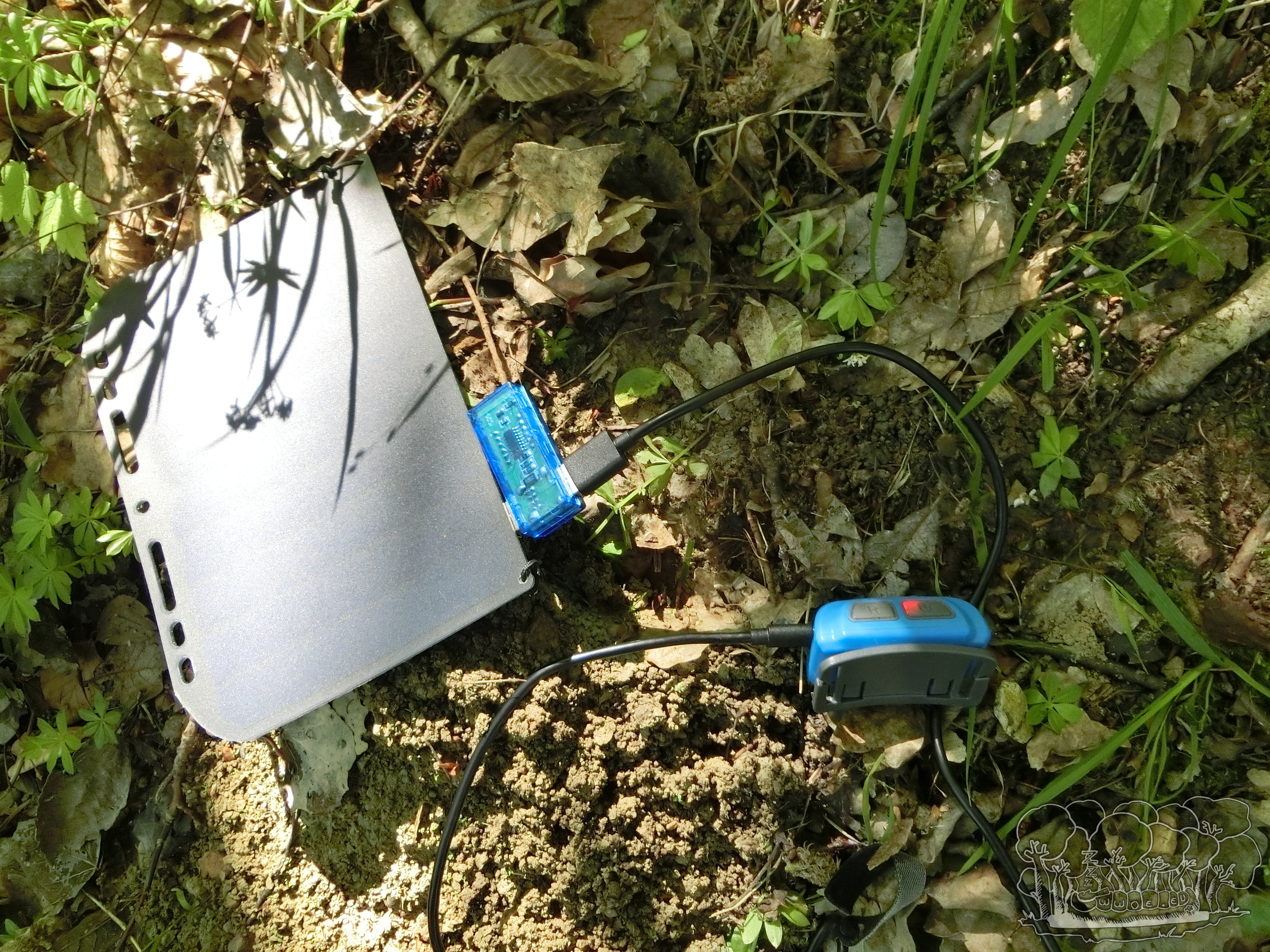
As soon as charging is complete, the red light goes out and a green light starts shining.
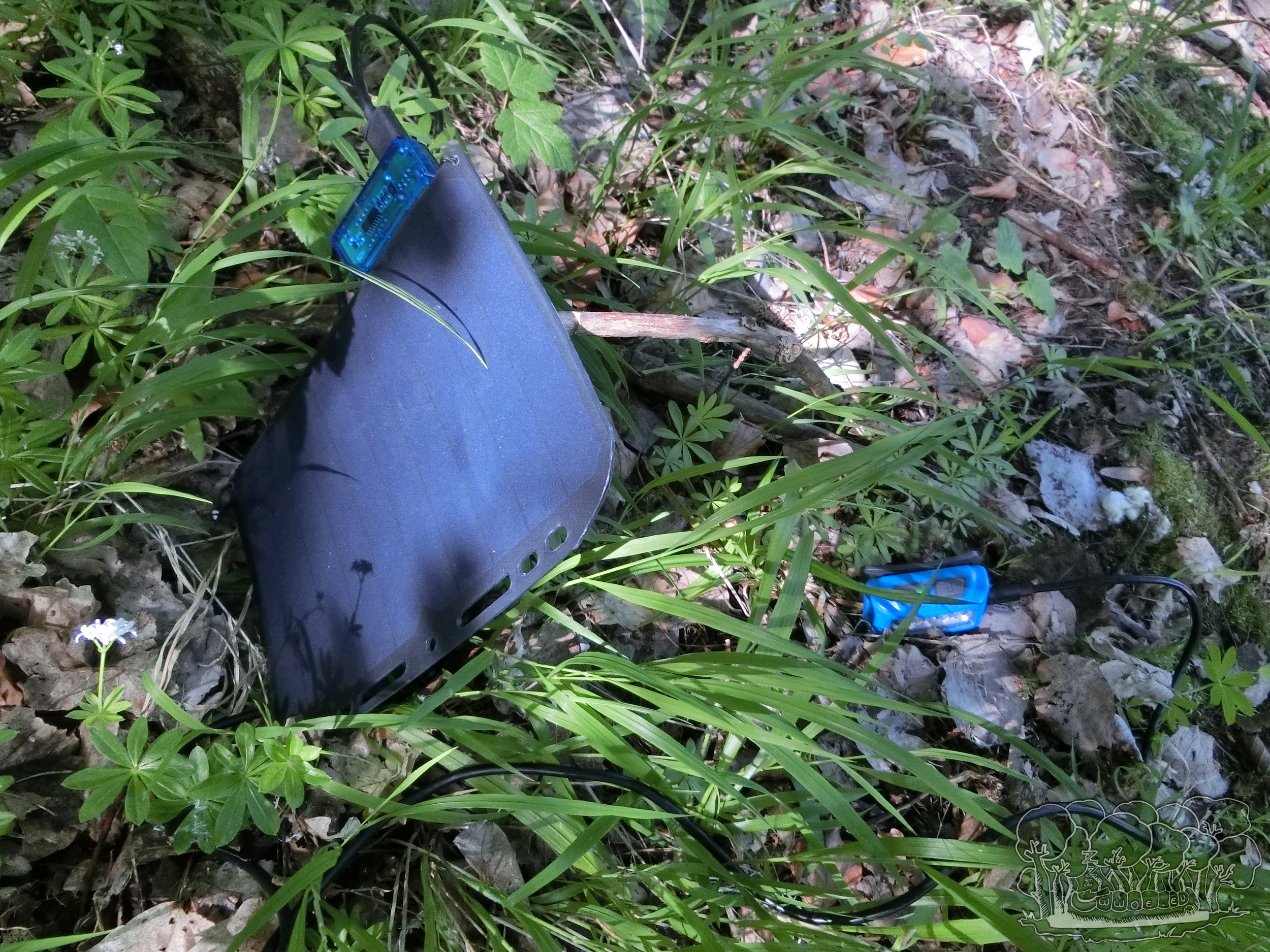
The charging electronics are very tolerant of voltage and current fluctuations. Thanks to this tolerant charging electronics, the headlamp can be charged directly and efficiently from a USB solar panel. Direct charging eliminates up to 50% of the power loss that occurs when converting voltage between the power bank’s battery, the 5 volts of the USB interface and back to the headlamp’s battery. When charging via USB, the red and green lights seem to indicate the charge status depending on the current. So it can happen that when the shadow of trees briefly covers a solar cell, the charging electronics show the end of the charge cycle with the green LED, because for the moment no high current is flowing anymore. When the panel is brought back into the sun, the current rises again and the lamp signals with the red LED that it is still charging. This is no big deal, but should be mentioned so that you don’t disconnect the lamp from the solar panel in a partially charged state and then wonder about a short battery life.
It surprised me that this inexpensive headlamp can even be used while charging. Thanks to this feature, no forced break is needed if the lamp should run out of power at night. In that case, it is enough to plug the lamp into the (hopefully) carried power bank and the night hike can continue.
The lamp weighs 70 grams including the headband. Since the headband is easy to remove and the lamp is very compact, it is predestined for a modification along the lines of Mike C. In this modification, the headlamp is sewn onto a beanie to save the weight of the headband.

Mike C. kindly gave me permission to use the following illustration from the book Ultralight Backpackin‘ Tips from page 23 — many thanks for that!
By leaving out the headband, the weight of the headlamp drops to just 45 grams.
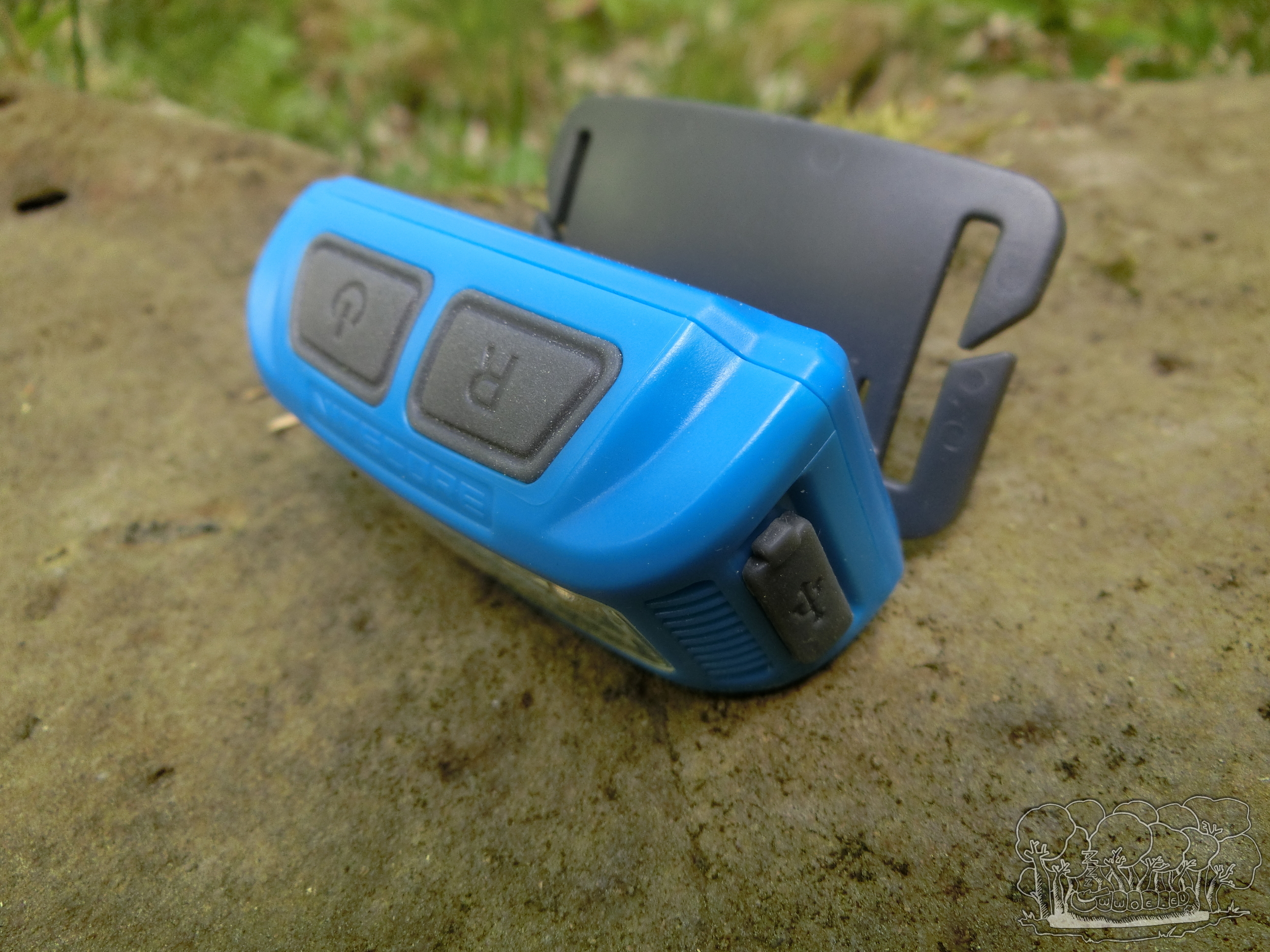
On the top of the lamp there are two buttons: one for switching on the white light and one for switching on the red light. The lights cannot be combined, however; when the white light is on, pressing the red-light button switches to red-light mode. From red to white light, you switch analogously with the white-light button. If both buttons are pressed simultaneously for one to three seconds, the buttons are locked. Only after unlocking by pressing both buttons at the same time can the lamp be switched on again. This measure effectively prevents the lamp from being switched on accidentally in the backpack.
Over the long Ascension Day weekend in the Rhön, this lamp convinced me of its strengths and will accompany me on my further trips — for example in Sweden this summer.
Note: The Nitecore NU10 was provided to me by KTL-Import GmbH in exchange for a neutral review. This, however, has no influence on the content of the review.
The headlamp is available directly from nitecore.de.


