Securely attaching a quilt to a sleeping pad
Lately I have repeatedly asked myself how best to attach a quilt to a sleeping pad in order to prevent cold drafts.
Ultralight Hike
Lately I have repeatedly asked myself how best to attach a quilt to a sleeping pad in order to prevent cold drafts.
A wide-cut quilt can simply be used as a blanket. In that case, almost no draft enters when turning over. If a draft does come in, you will subconsciously rearrange the quilt during sleep like a blanket in your bed at home and reliably stop the draft that way.
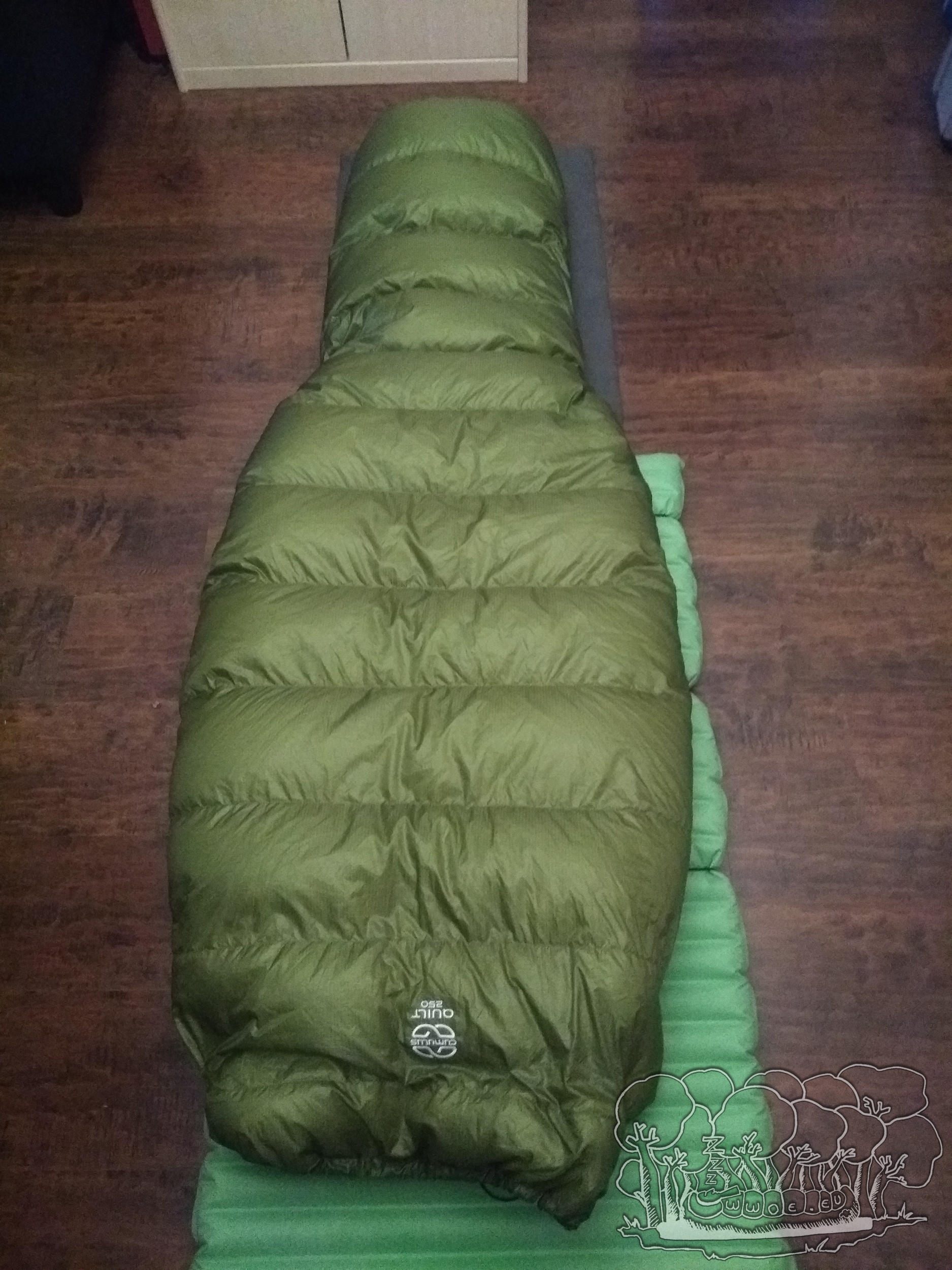
With a narrowly cut quilt, such as the Cumulus down quilt and my body shape, the situation is different; the quilt must be attached to the sleeping pad to prevent cold drafts from entering when turning over. On the ULTF Forum ULGeher took the trouble to sketch various attachment options. In the meantime I have tried all variants and can provide a brief summary:
#1 - The variant without attachment cords cannot be combined with a Cumulus quilt and my voluminous upper body
#2 - This variant is also suggested by Cumulus themselves, but in my trials I still got cold drafts. The setup is relatively complicated and does not match my keep-it-simple approach.
#4 - This variant works excellently with a sleeping pad up to 50 cm wide. In combination with wider pads, such as a NeoAir in size large, a fair amount of air still comes through the sides. These must therefore be sealed from the inside with clothing and similar items. Since I have been sleeping exclusively on a wide sleeping pad for over half a year, this solution is also mediocre at best for me.
On the last joint tour with Bimbi, I thought for a long time about how a quilt attachment could be sensibly implemented that is equally suitable for wide and narrow sleeping pads.
After careful consideration, the following attachment system emerged.
The set consists of:
3 elastic cord with 2 mm diameter about one meter long
6 elastic cord with 2 mm diameter 5-10 cm long
First, the short elastic cords must be tied into a loop onto the quilt loops. The cross knot has proven effective, as very little material is needed for it.
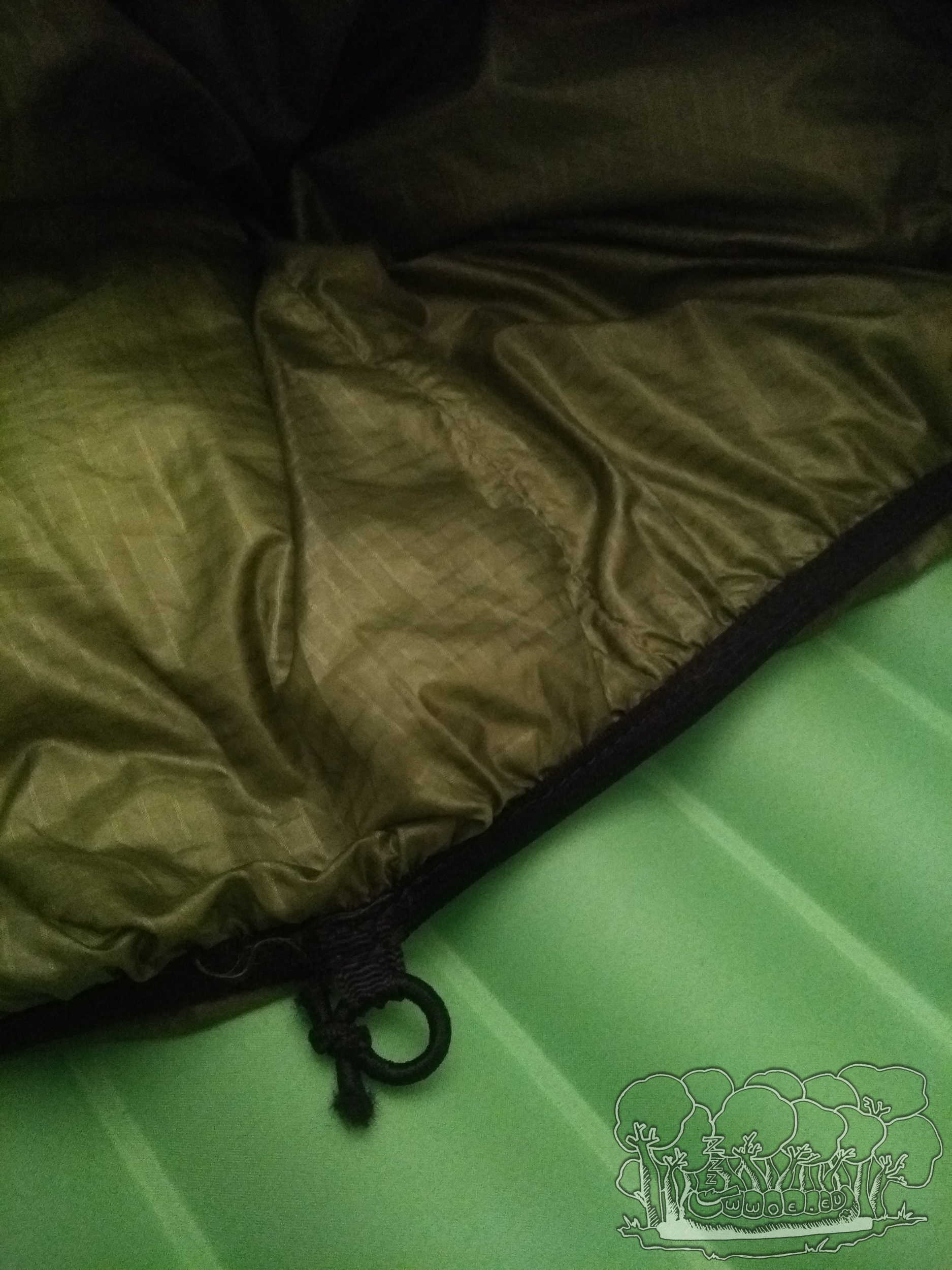
Next, the sleeping pad attachment is made.
First, tie a loop on one side of the long elastic cords, then thread the two small cord locks through and slide them towards the loop. The large cord lock goes on the side without loop and later serves as a fastener. Now secure the elastic on this side with a knot so it cannot accidentally slip through the cord lock, and the work is finished.
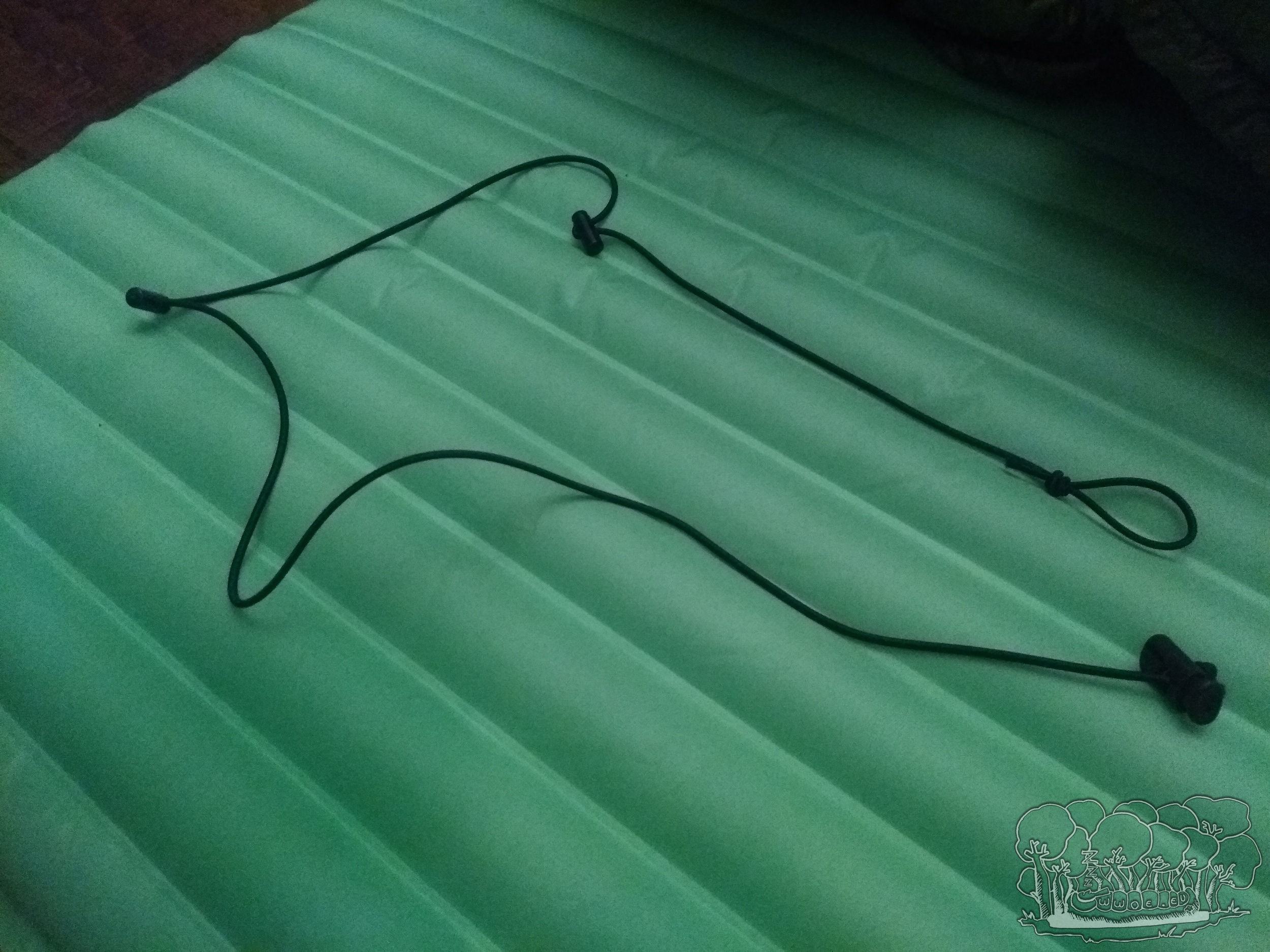
This attachment can now be placed around the sleeping pad. Once the large cord lock is inserted into the loop and the elastic cord tightens, the attachment is in place.
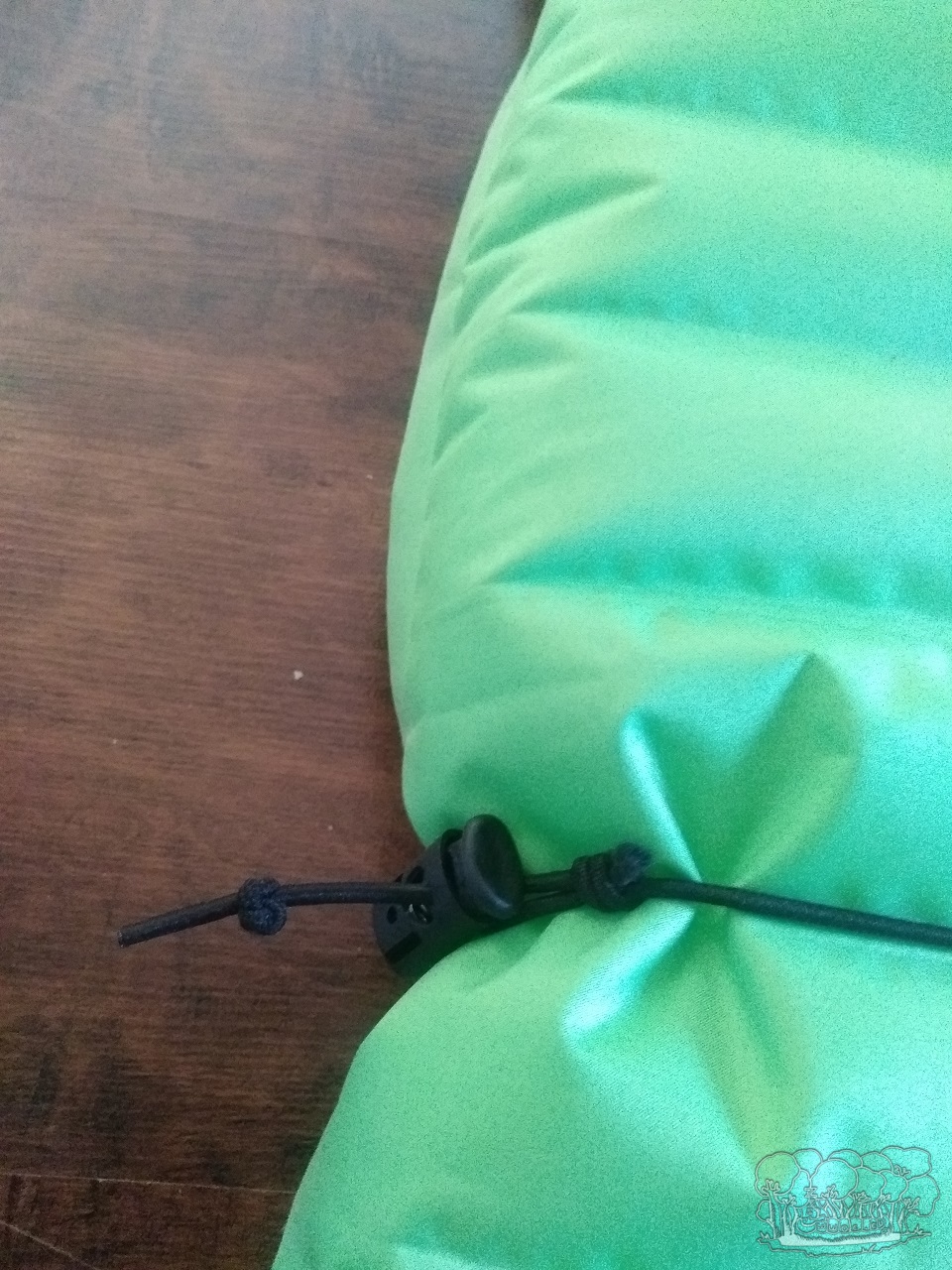
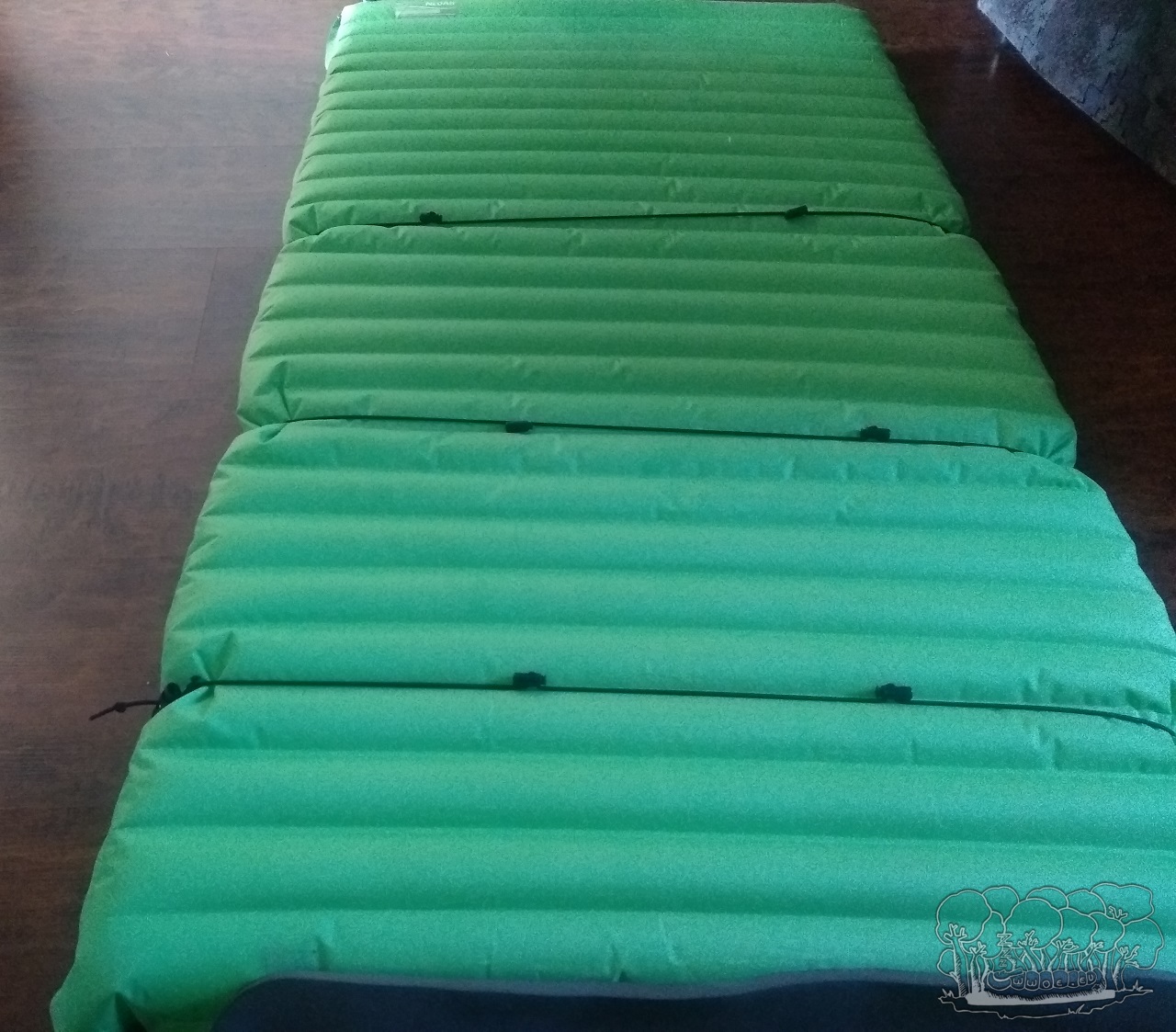
I wish you comfortable nights without drafts  !
!


