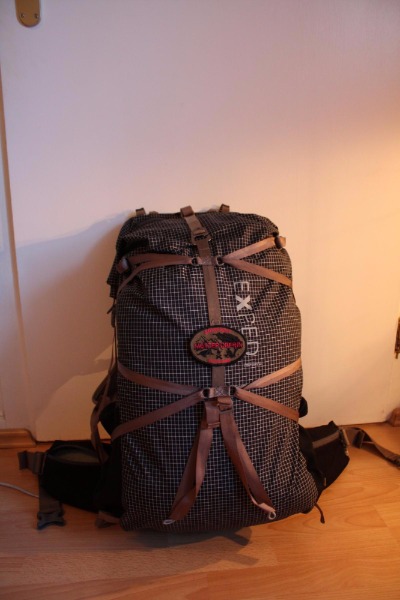
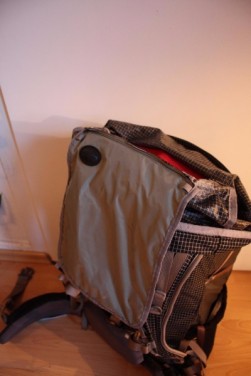
Hello and thank you to Kai for the opportunity to contribute here as a guest author. Not all of my texts fit the topic of ultralight trekking, but I will gladly provide those that do. The Lightning series has existed since 2013. I first saw the pack with friends at the end of 2014 and finally gave it a trial run at the beginning of 2015. It was to be my first top-loader over 40l, and I did not make the decision lightly.
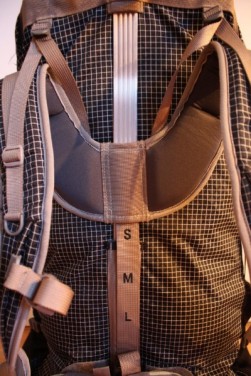
The Exped Lightning is made of robust 210D Dyneema Gridstop/nylon and has a PU coating on the inside. At an empty weight of 1100g it is surprisingly light, striking a great balance between light gear and a full carrying system (with a central aluminium stay). The carrying system is breathable and continuously adjustable in height from S to L (41-58cm). The Lightning thus fits almost any back. Moreover, it suits both men and women.
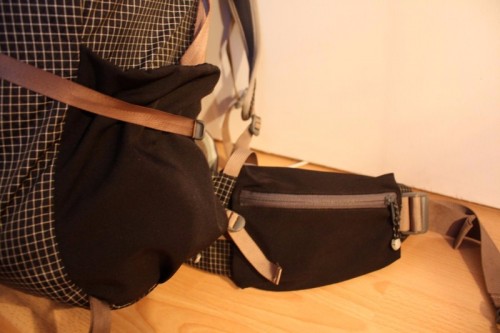
For me, a decisive point in my choice was the pockets on the left and right of the pack. There is room for the water bottle (1l is no problem) and things like a beanie, buff, apple, muesli bar, nuts and so on.
There is more storage on both hip fins. There is surprisingly much room for a phone, GPS, tissues, muesli bars, gum or whatever else you need. And I can reach it easily on the trail. The hip fins are nicely wide and excellently padded. Another feature that is very important to me. In general, the hip belt topic is even more important for women than for men, since we usually have less developed muscles in the neck/shoulder area. So far I have loaded the Lightning with up to 16kg and could carry it comfortably at all times. According to the manufacturer it can take up to 24kg, but who wants that? ;-)
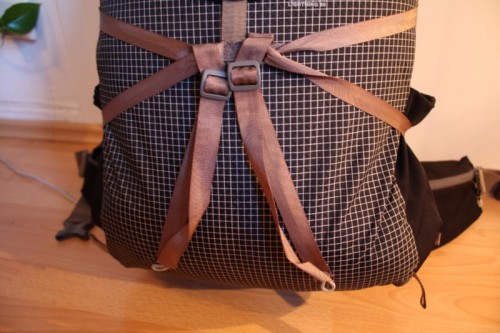
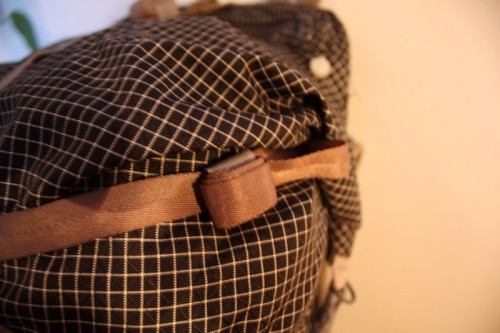
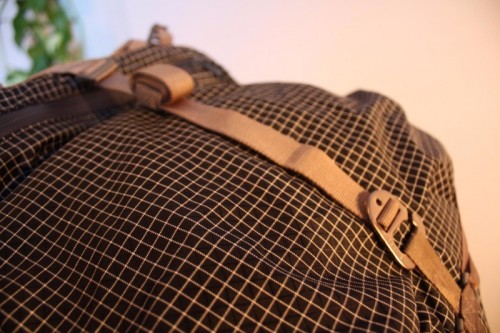
The pack has 60l and a large main compartment (roll-top closure) with room for everything. I work with Exped UL Fold dry bags and zip bags and have thus found a convenient system to bring structure to the main compartment. If needed, the Lightning can be cinched nicely slim with the compression straps. It then shrinks to an estimated 40l. Overall, the compression strap system is well thought out and full of clever solutions. On the lower front there are two lash straps for attaching closed-cell foam pads, jackets or a sit pad.
Unused compression straps are simply rolled up.
The roll-top closure is secured left and right with simple side-release buckles.
The top strap lets you fix additional items to the pack (hat, jacket,...).
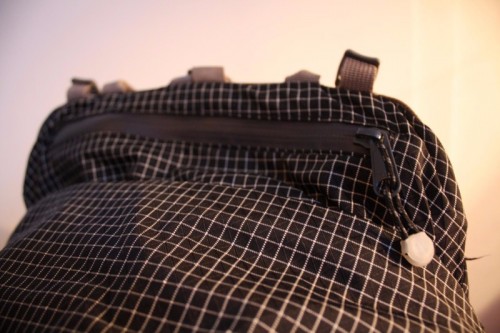
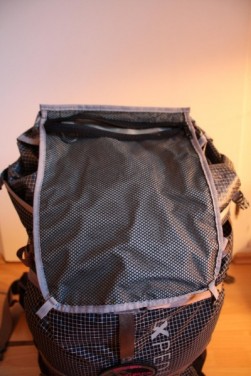
The roomy main compartment is complemented by a pocket sewn to the top edge. It is divided into two parts. From the outside you reach one part through a waterproof zipper (I keep the first aid kit and emergency set there). On the inside you can see the second part of the pocket through mesh. There I store my hygiene kit, towel and toilet paper. This pocket can also be closed with a zipper.
By the way, the light-coloured zipper pulls glow slightly in the dark. Handy, because you can save yourself the headlamp when you have forgotten something.
The roomy mesh pocket
Because the pocket sits at the top edge, it can simply be flipped out of the way when packing and is not in the way even when filled.
Overall I am very satisfied. I have had the pack for a year and a half now and feel no need to buy another one. The pack has been with me in the Dolomites, Tenerife, Madeira, Sweden and Germany. Along the way it handled classic trekking, bunkers and caves, and cross-country runs through branches and thorns without complaint. It also had to serve as a sit pad a few times.
During this time of intensive use I found only one point of criticism. I would very much like a large mesh pocket on the front to store wet tarps or rain gear outside. Exped at least offers a remedy in the form of the “Flash Back Pocket”, which I will describe in more detail at some point. Otherwise the pack can be used practically from a gourmet trip over a weekend to two-week treks - in summer and winter alike.
Yours, Bimbi
Note: I bought the item described at full price in the Exped factory shop