Meals during a hiking trip are very individual. While some view food preparation on the trail as a necessary evil for energy supply, others celebrate it with opulent and elaborate meals. I find myself in both categories, because I like to eat tasty meals on the trail, but these should be quick and prepared with manageable effort.
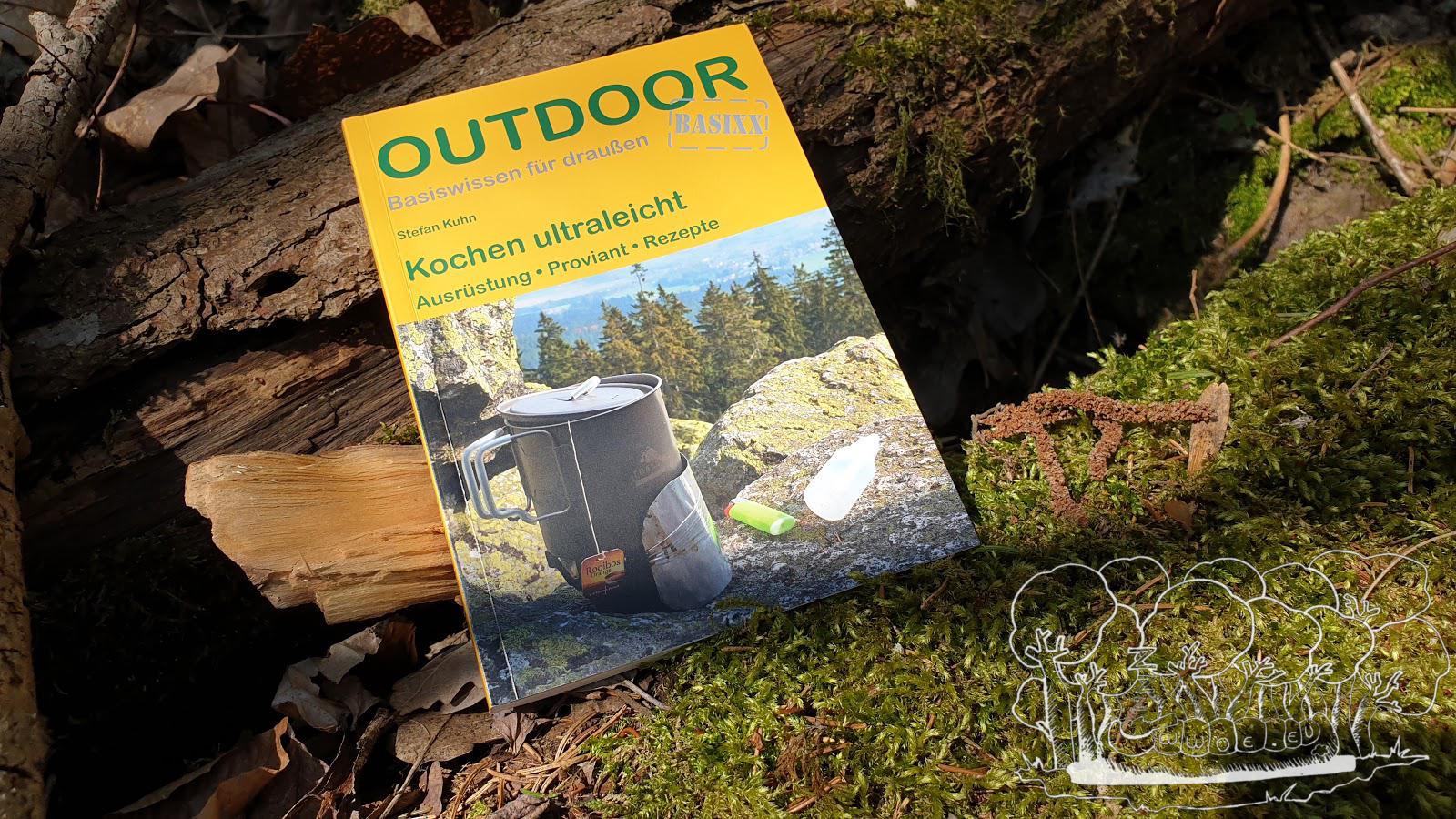
Stefan Kuhn (known through his blog happyhiker.de) recently published the book “Kochen Ultraleicht” (“Ultralight Cooking”) from Conrad Stein Verlag. The book deals with the category of meals I favor.
Structure
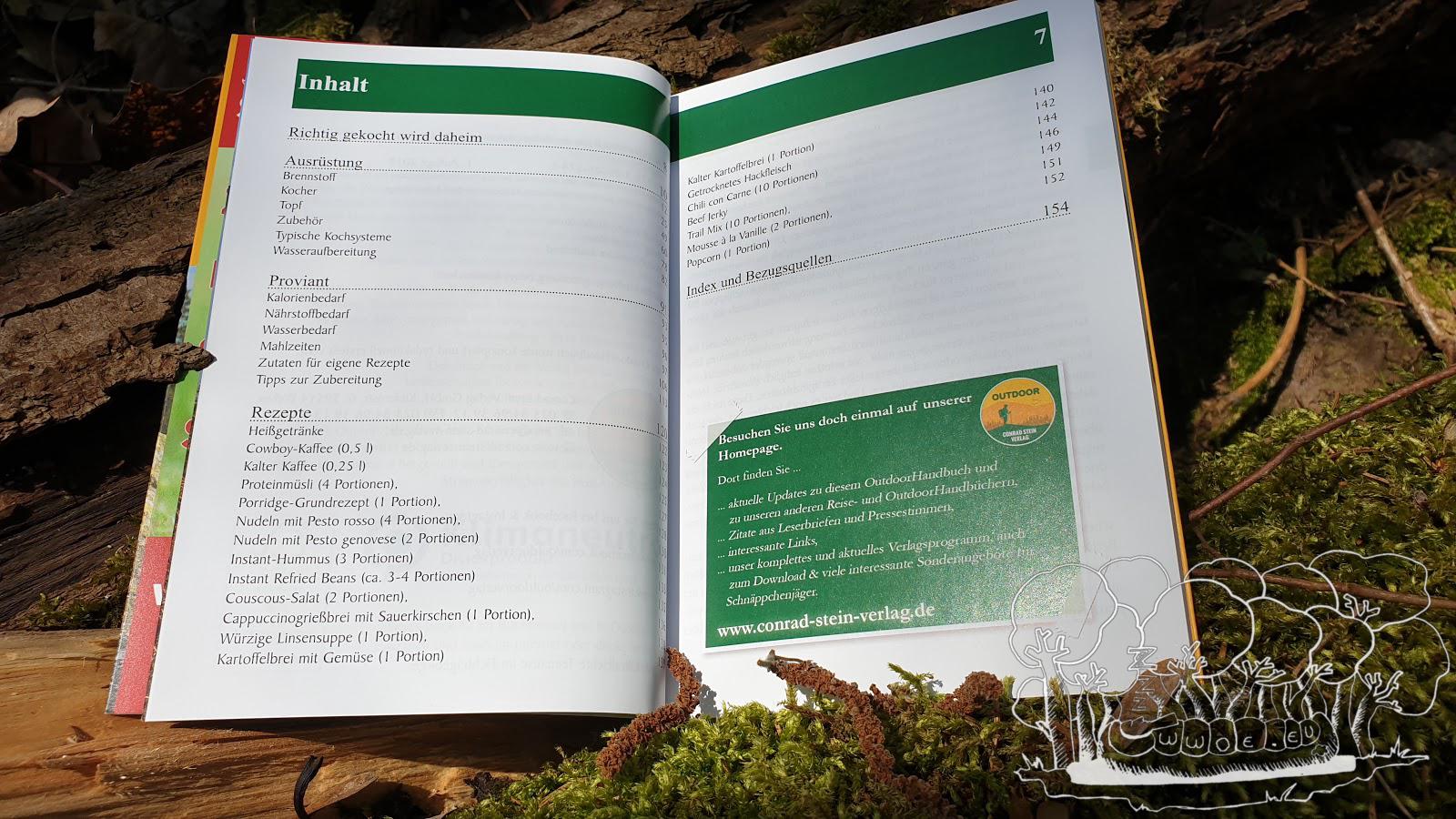
The book consists of several chapters that build on each other. In the first chapters, the basics of cooking on the go are explained. The reader learns that the ultralight kitchen on the trail generally relates to heating water.
Introduction
In the introduction, the reader is told that using ready-made meals can save a lot of weight. On the one hand, the dehydrated ingredients weigh little, and on the other hand, a smaller cooking vessel is enough, which only needs to hold the amount of water required for cooking.
Equipment
In this chapter, various cooking systems are presented. The advantages and disadvantages of certain configurations are compared. For example, the reader learns when heavier gas or petrol stoves can be worthwhile in terms of weight on an ultralight hike. This chapter is very extensive and provides the reader with an in-depth overview of the various cooking systems.
Provisions
Here, the reader is taught the basics of nutrition. They learn which substances are fundamentally needed by the body and in which foods these are found. In addition, the reader is told how to treat water on the trail and which foods are generally suitable for outdoor recipes.
Finally, the eating habits of various well-known long-distance hikers are explained in this chapter.
Recipes
The heart of the book. The recipes presented here are, in terms of effort, somewhere between the Quick and Dirty and gourmet recipes from my blog. The majority of the meals must be prepared at home and are only prepared on the trail by pouring boiling water over them. The varied recipes include breakfast, main meals and snacks.
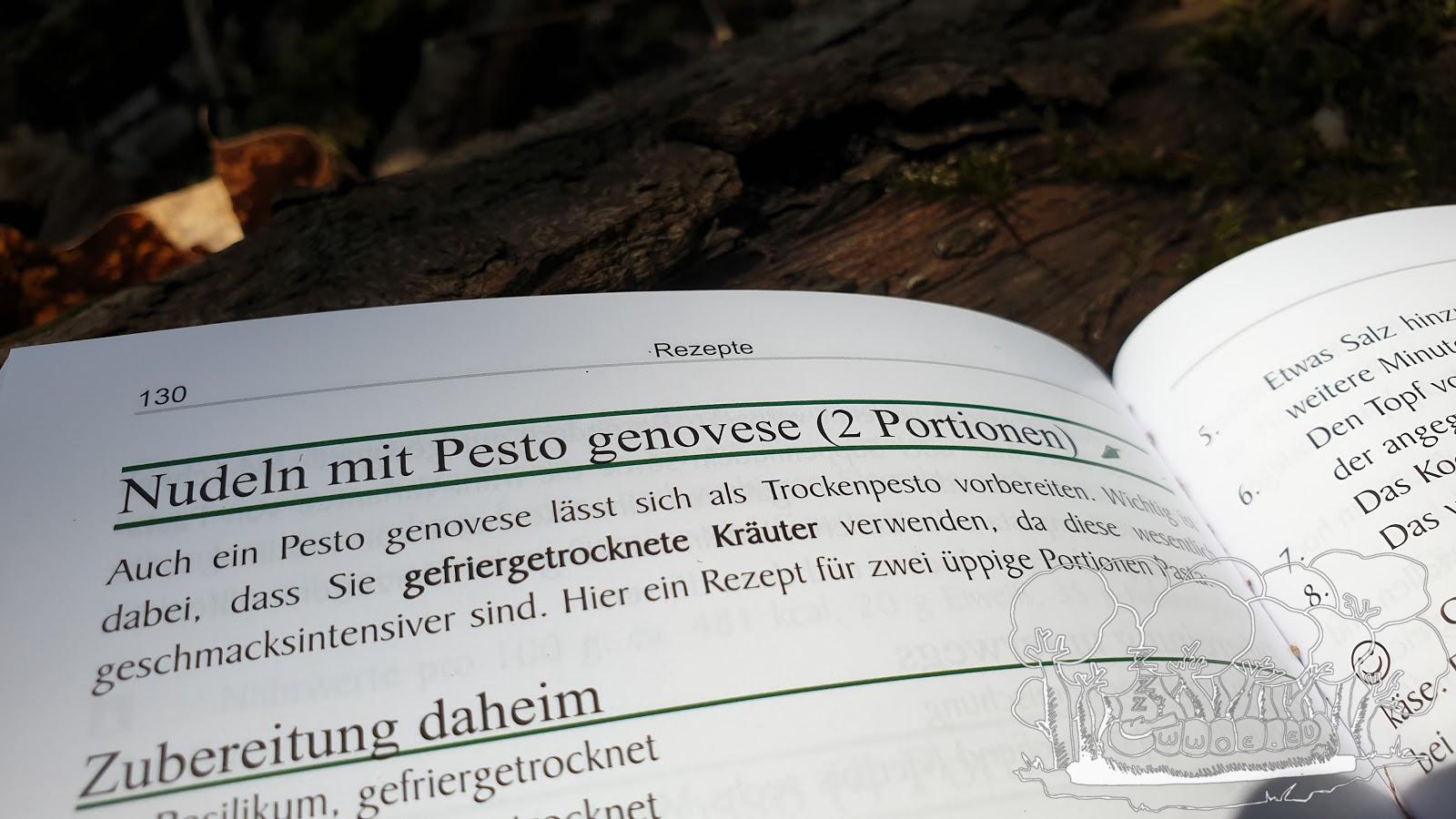
The book offers the reader a successful introduction to the ultralight kitchen. It is suitable both before a trip as a source of information for collecting inspiration, as well as a reference work for the recipes. All in all, the book is a successful complete work that describes both information on cooking on trips and the peculiarities of the ultralight backpacking kitchen. I find it impressive to see which delicious dishes can be prepared on the trail using only hot water. I will particularly enjoy the pesto more often on future trips!
Disclaimer
Conrad Stein Verlag provided the book to me free of charge for a review. However, this has no influence on the content of the review.
Notes
[a]Fortunately, the book is only needed for preparation at home.